ANKURA SKY / HOTEL TECHNOLOGY

Digital Signage

Information and wayfinding in the right place at the right time.

Professional displays and centrally managed content for lobbies, conference rooms, restaurants and public areas.

01 / THE SYSTEM

A managed information environment for modern spaces.

Information displays have long since evolved beyond screens used only for advertising images or video. Modern Digital Signage is a centralized information system that makes it possible to manage content across one, dozens or hundreds of professional displays, regardless of where they are installed.

These systems are used wherever information must remain current, clearly visible and easy to update without printing new materials or physically accessing every screen.

Content may include information notices, wayfinding, event schedules, menus, promotional materials, corporate information, video, graphics or combined media.

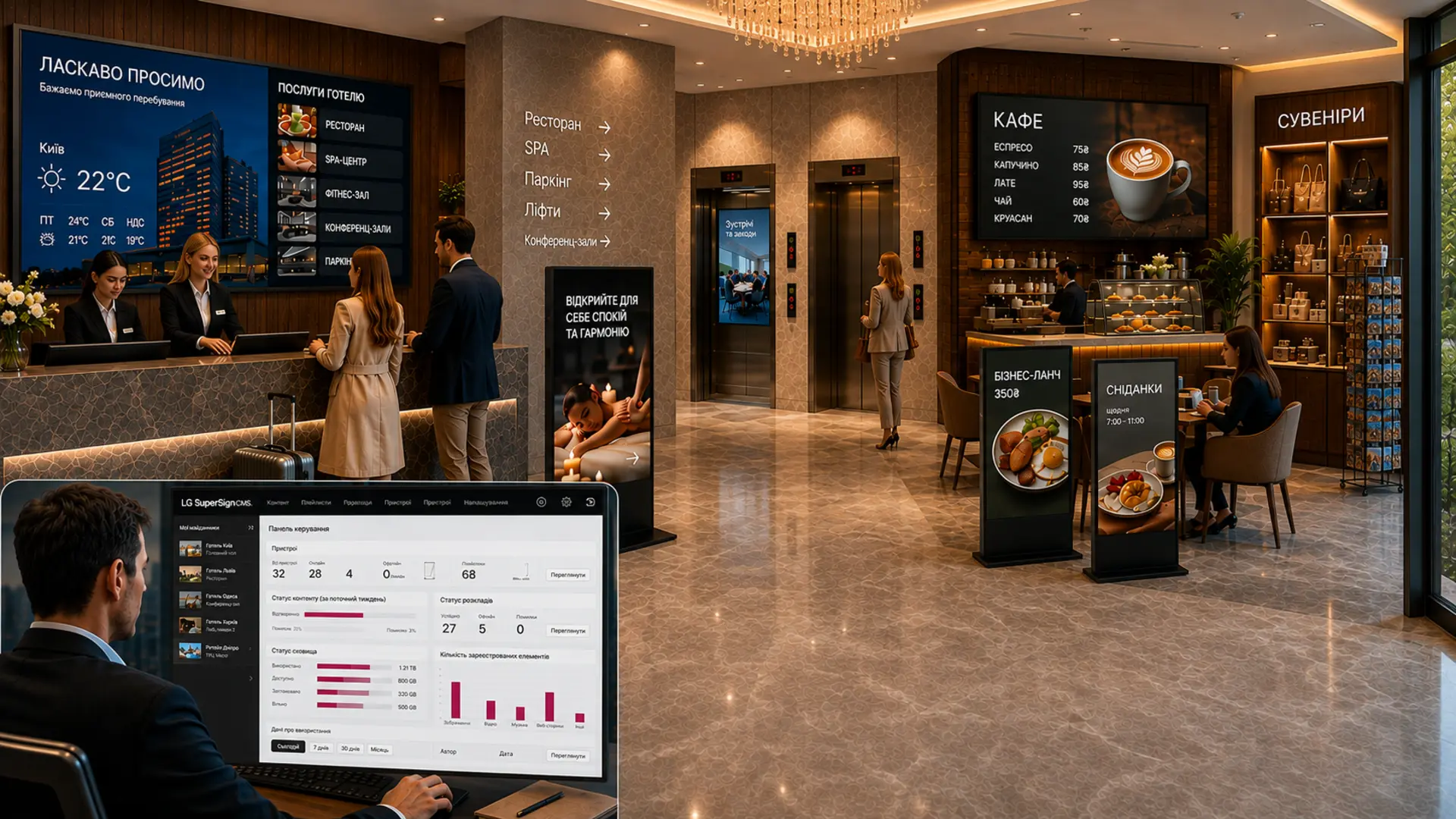
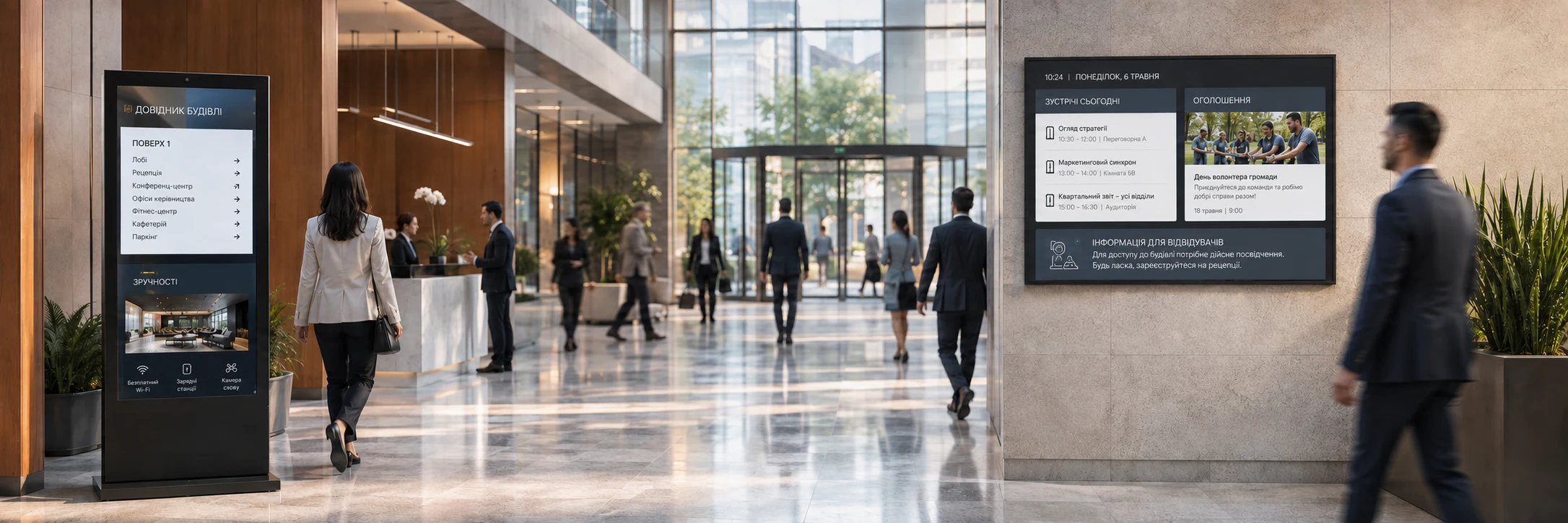
Information displays and wayfinding in a modern hotel lobby

02 / APPLICATIONS

Information where it is needed

01

Hotels and business centres

In a hotel, Digital Signage creates a unified information environment across public areas. Displays in the lobby, at reception, in conference areas, restaurants, lift halls and on guest floors help visitors find their way and receive timely information about events and services.

Screens can present wayfinding, conference schedules, restaurant and spa information, transfer details, house rules and other services. Content can change by time of day, event programme or the specific role of each hotel area.

In business centres and corporate spaces, the system serves a similar purpose: a building directory, directions to offices and meeting rooms, meeting information, events and important notices for visitors and staff. Centralized management keeps information consistent and current throughout the building.

Information displays and wayfinding in a modern hotel or business environment
02

Restaurants and food service

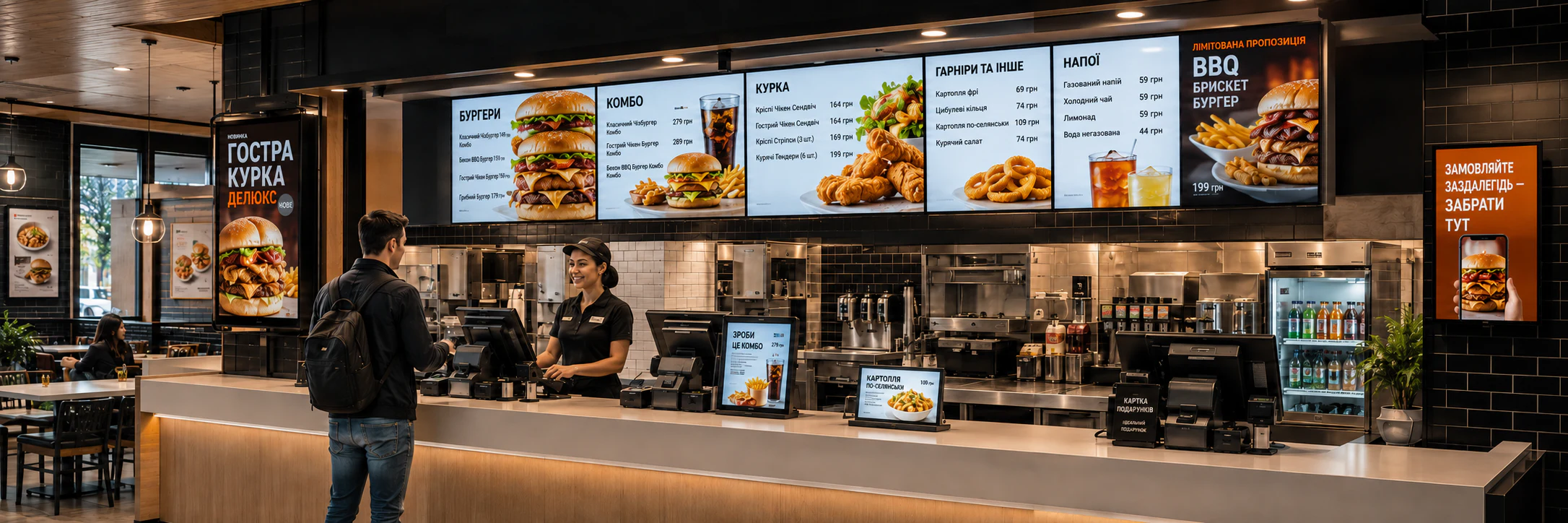
In restaurants, cafés, food courts and quick-service venues, information displays primarily function as dynamic menu boards. They can present dishes, prices, offers, promotions, seasonal items and visual content that helps guests make decisions more quickly.

Unlike printed menus, digital content can be changed immediately without producing new materials. Breakfast offers can automatically give way to the daytime menu, while a special item or limited promotion can appear only during selected hours.

For multi-site operators, content can be prepared centrally and distributed to selected displays or venue groups. This helps maintain a consistent visual identity, accurate pricing and coordinated customer communication.

Digital menu boards and information displays in a modern restaurant
03

Retail and commercial spaces

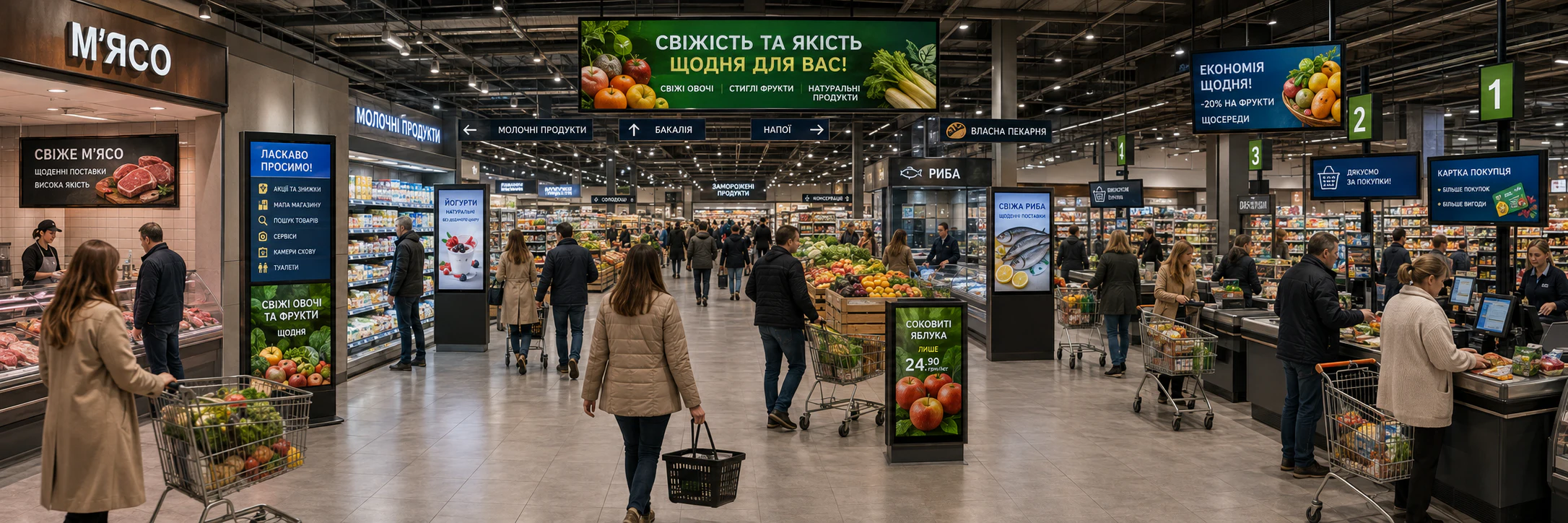
In stores and shopping centres, Digital Signage combines wayfinding, product information and promotional communication. Displays can operate at entrances, in windows, throughout sales floors, in departments and at checkout areas, supporting customers along the entire journey.

In a supermarket, the system can identify departments, highlight special offers and present new products or loyalty programmes. In a shopping gallery or individual store, screens can support seasonal campaigns, showcase collections and complement window displays.

Different displays do not have to show identical material. Content can be assigned by zone, screen format and the role of a particular retail location while centralized control is retained across the entire system.

A network of information and promotional displays in a modern supermarket
04

Transport and public spaces

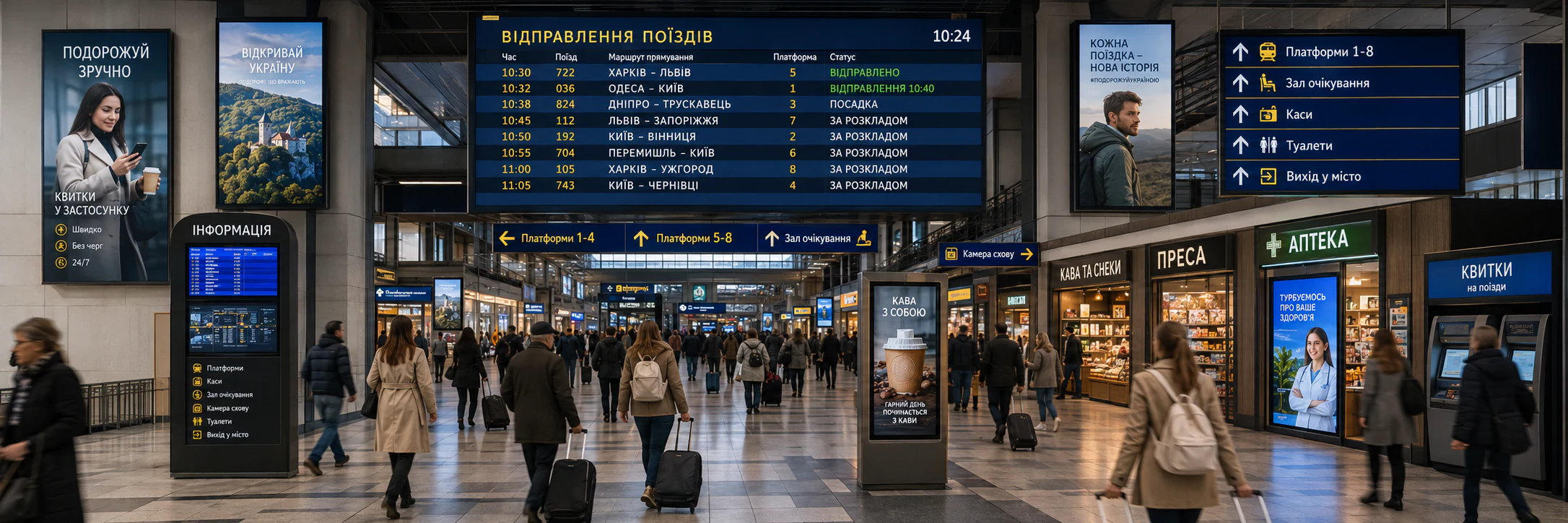
In transport infrastructure, information must be highly visible, clear and timely. At railway stations, airports and transport hubs, displays show schedules, directions, platform numbers, changes and service messages, helping large numbers of people move through the space efficiently.

In educational, medical and other public facilities, Digital Signage supports timetables, wayfinding, room and service information, operational notices and messages for visitors and staff.

One system can combine reference information, navigation, public messaging and commercial content. Centralized updates are especially important where changes must appear quickly across many information points at the same time.

Wayfinding and information displays at a modern railway station

03 / DIGITAL SIGNAGE

From printed signs to a digital information environment

The idea behind Digital Signage appeared long before the term became widely used. Advertising, information boards, signs, menus and timetables had been part of public and commercial spaces for decades. Their main limitation was static content: every change required a new printed material and a physical replacement.

The arrival of affordable electronic displays and the growth of computer networks in the late twentieth century gradually changed this approach. A screen offered a decisive advantage over print: it could show dynamic content and update information without replacing the medium itself.

The next important step was connecting displays into a network. Information could then be created, distributed, scheduled and updated centrally across many screens. This combination of professional displays, network infrastructure and software management became what we now call Digital Signage.

With broadband networks, cloud technology and professional content management systems, Digital Signage evolved from an electronic poster into a complete digital communication channel. Today it supports advertising, wayfinding, information, menus, timetables, corporate messaging and real-time communication with visitors.

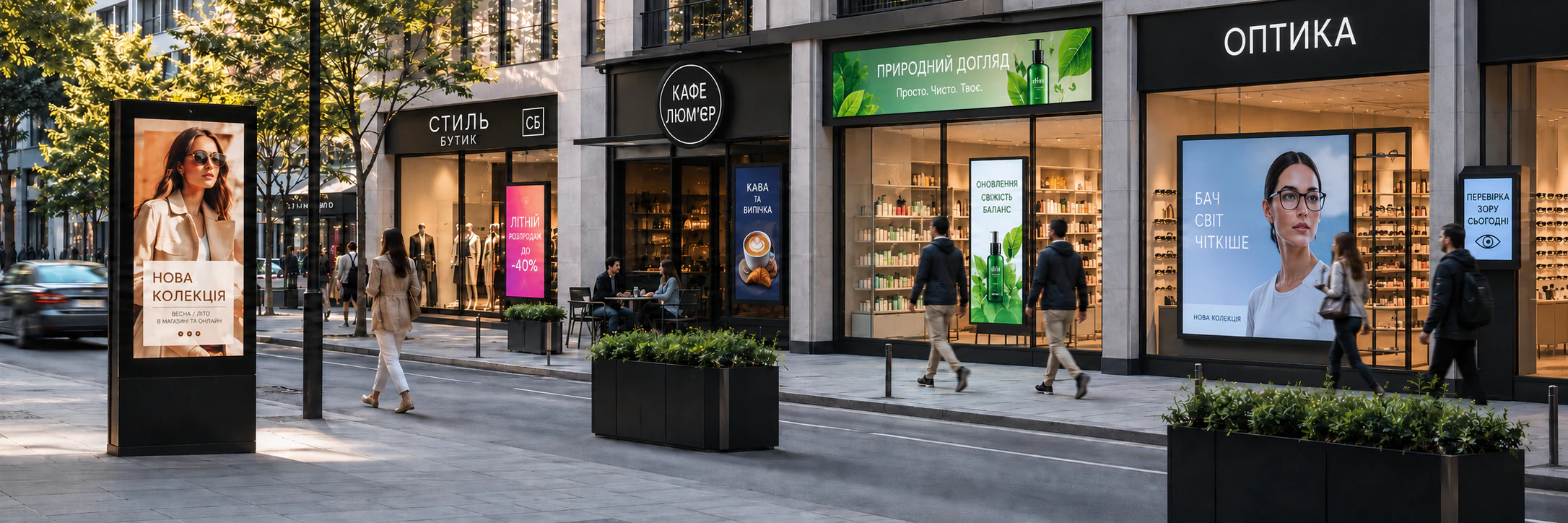
Information displays in an urban retail environment

04 / DIGITAL SIGNAGE

Professional displays

Digital Signage operates under conditions that differ substantially from television use at home.

Displays may remain on throughout the working day or around the clock, operate in public areas and continuously present information content.

Professional displays are therefore designed for the required duty cycle and for centralized management.

Depending on the objective, a system may use standard information panels, large-format displays, portrait screens, interactive panels, video walls or specialized display solutions.

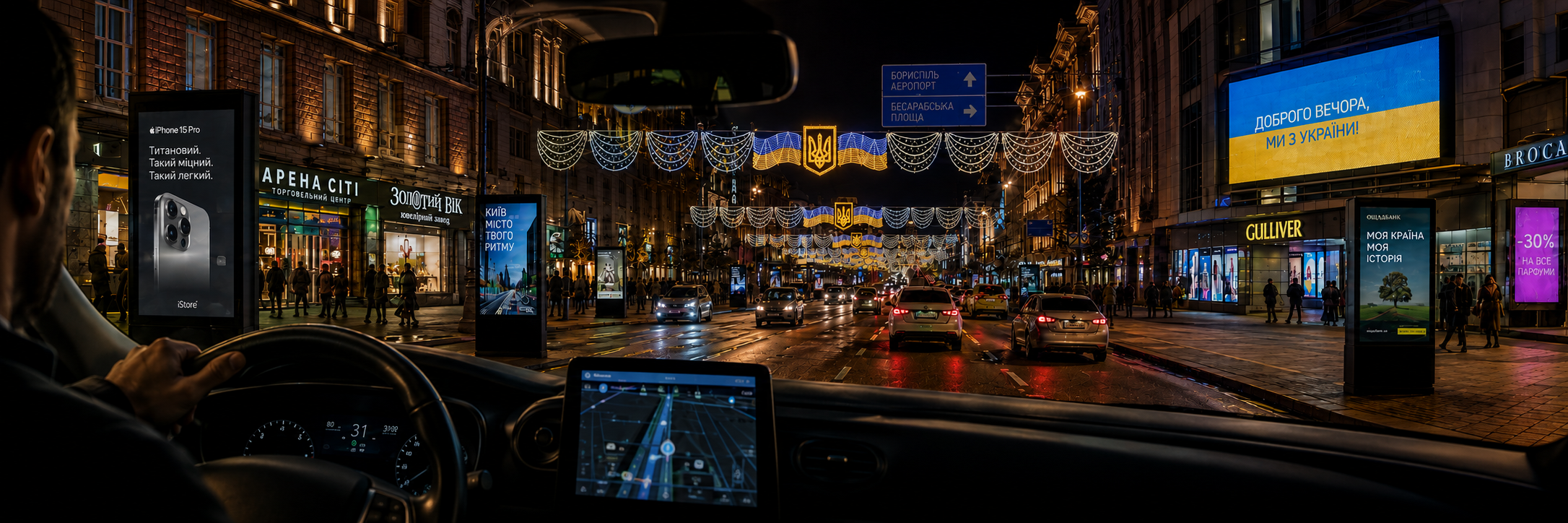
Digital advertising and information displays on a Kyiv street at night

05 / DIGITAL SIGNAGE

From a single screen to an information system

Digital Signage can consist of one display or cover a large number of screens across multiple properties.

The principle remains the same: content → management system → professional displays → audience.

Centralized management is what turns a collection of information panels into a complete system.

It enables rapid updates, scheduled playback automation, reduced use of printed materials and consistently current content across different parts of a property.

Digital Signage is not simply a screen on a wall. It is a managed communication channel between an organization and its audience.

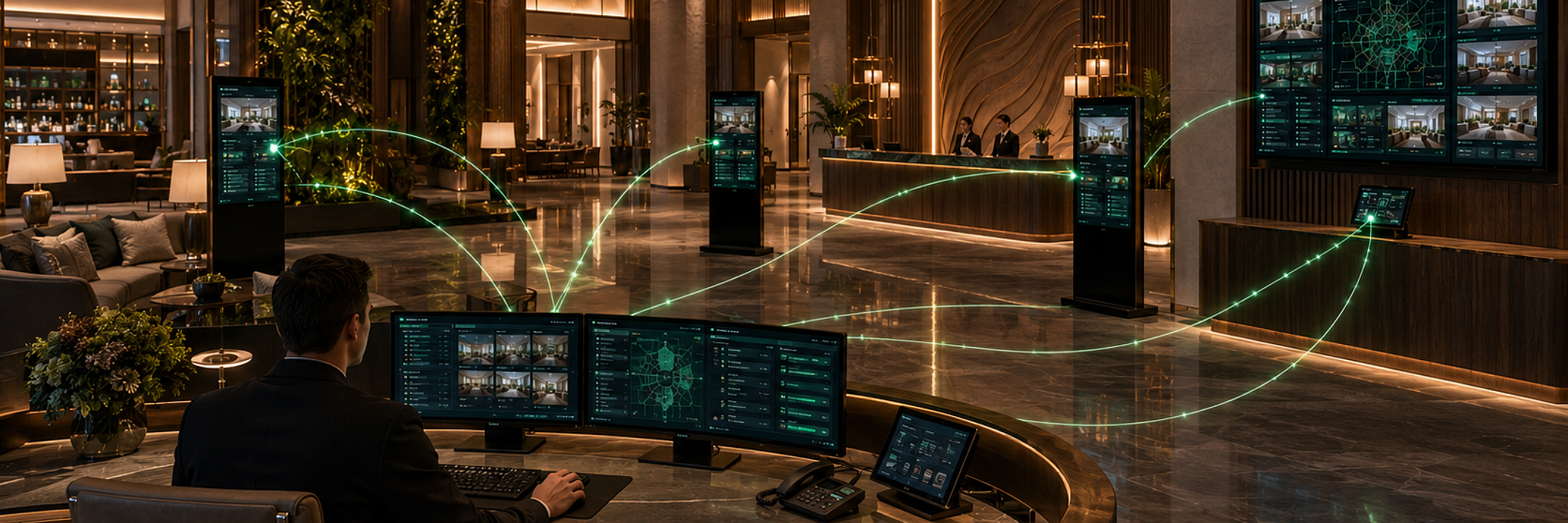
Centralized management of a network of Digital Signage displays in a modern hotel

06 / DIGITAL SIGNAGE

LG SuperSign CMS — centralized
Digital Signage management

To build professional Digital Signage systems, ANKURA SKY uses LG software solutions, including LG SuperSign CMS — a centralized platform for managing content and professional LG displays.

SuperSign CMS combines content creation, scheduling and distribution with device management. Instead of working with each display separately, the administrator receives one environment for managing the property’s entire information system.

LG SuperSign CMS turns separate professional displays into one managed information system.

Content creation and preparation

SuperSign CMS includes built-in content creation tools. Its editor can combine text, images, video, background graphics, widgets and other elements into complete information layouts.

Ready-made templates can be adapted to the brand identity and operational requirements of a particular property.

The system can also use external content such as web pages, web video and streaming sources. This extends Digital Signage beyond prepared media and allows it to incorporate information from external services.

Scheduling and automated playback

Prepared content can be organized into playlists and assigned to specific displays at specific times.

For example, the same hotel display can show breakfast information in the morning, wayfinding and conference schedules during the day, and restaurant, spa or other service information in the evening.

Once a schedule is created, the system controls playback automatically. Staff do not need to replace materials manually on individual displays.

Different content for different displays

A large Digital Signage system does not require every screen to show the same information.

SuperSign CMS distributes different content centrally to individual displays and device groups. One system can therefore serve a lobby, conference area, restaurant, bar, lift halls and other parts of a property at the same time.

Tagging provides an additional way to define which devices should receive specific content, making large display networks significantly easier to administer.

Centralized device control

SuperSign CMS manages more than content. It can remotely monitor registered professional LG displays and control their available settings.

Administrators can review device status in one interface and remotely adjust parameters such as picture, sound, time and other system settings.

This is especially valuable on properties with many displays, where checking basic status or changing a setting should not always require physical access to the screen.

System scalability

A key benefit of a centralized CMS is the ability to expand Digital Signage together with the property.

A system can begin with a small number of displays and later grow with new information points. The management principle remains unchanged: displays are registered in one environment and assigned the required content, schedule and operating parameters.

For large properties, this avoids a collection of independent screens that each have to be maintained separately.
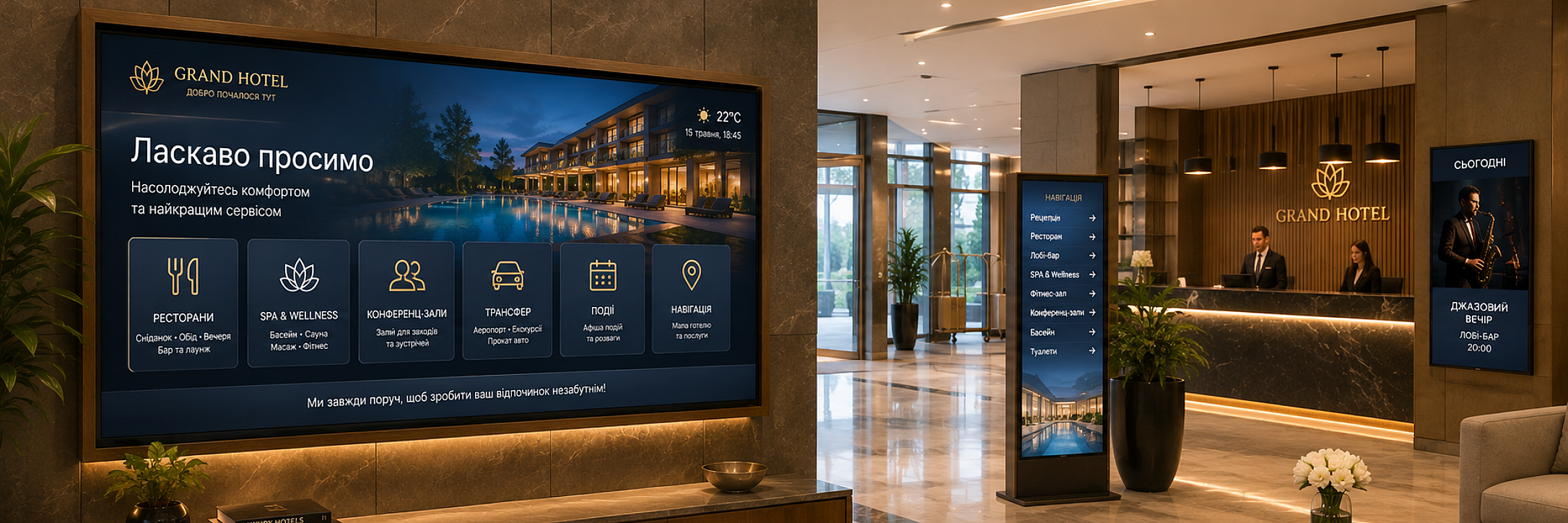
Centralized management of a hotel information display network with LG SuperSign CMS